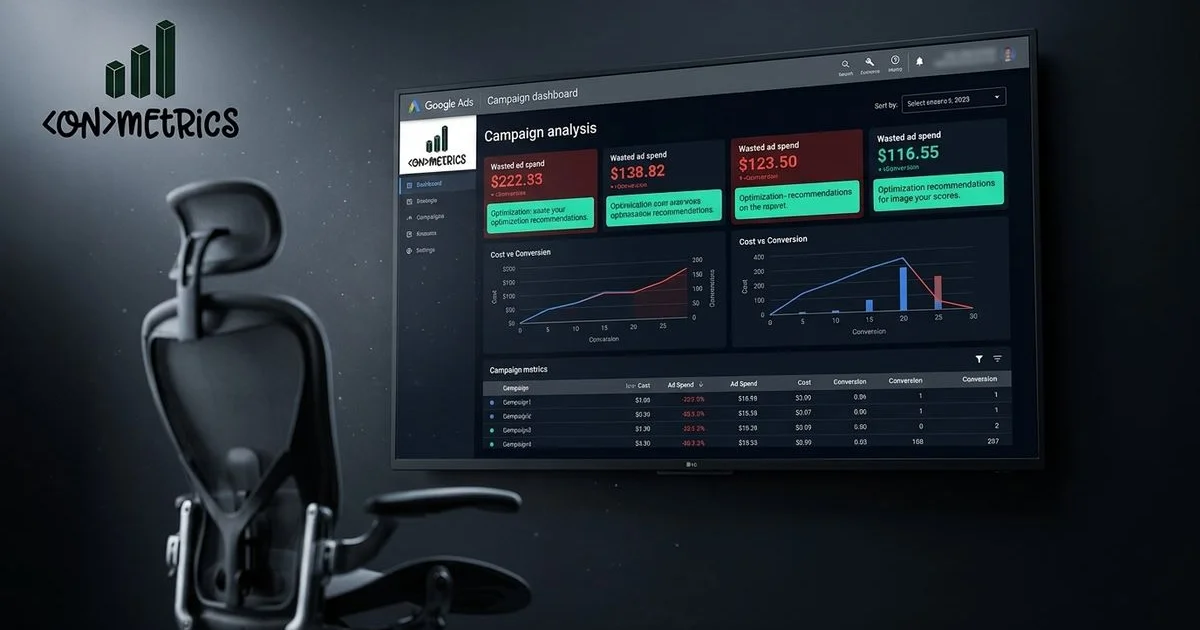

Marketing attribution for small businesses should answer a blunt question: what helped create the lead? Not what got a click. Not what made a chart look busy. What helped someone call, book, buy, or request a quote?
Attribution is the receipt trail for marketing decisions. It will not explain every human choice perfectly, but it can make the next budget conversation less dependent on guesswork.
Start with the Events That Matter
Google Analytics describes attribution as assigning credit for important user actions to ads, clicks, and other factors along a user's path. GA4 attribution reports include data-driven, paid-and-organic last click, and Google paid channels last click models.[1]
For a small business, the important events are rarely pageviews alone. They are calls, forms, booked appointments, quote requests, purchases, qualified consultations, and sometimes offline sales. A blog post that creates three qualified calls may matter more than a page that creates two hundred casual visits.
Attribution Settings Change the Story
Google Analytics attribution settings can determine how key-event reports assign credit, what lookback windows are used, which channels are eligible, and how compatible historical and future event-scoped data are reported.[2]
That means attribution is not one fixed truth. It is a model with settings. A business owner does not need to become an analytics engineer, but they should understand that channel credit can change when the model, lookback window, or tracking setup changes.
Data-Driven Attribution Has Volume Caveats
Google Ads says data-driven attribution uses conversion data to calculate each ad interaction's contribution and that all conversion actions are eligible. It also says model performance improves with more data and recommends at least 200 conversions and 2,000 ad interactions in supported networks within 30 days for more accurate analysis.[3]
This is a key small-business caveat. A low-volume account can still use attribution, but it should treat the output as directional decision support, not courtroom evidence. If the business only gets a handful of qualified leads per month, lead-quality review may be more useful than arguing over decimal-point channel credit.
Small Businesses Do Not Need Enterprise Complexity
You do not need a giant data warehouse to make better decisions. You need clean tracking on calls and forms, consistent source data, simple lead-quality notes, and a way to connect campaigns to outcomes.
ONmetrics handles marketing attribution and reporting with that practical lens. The goal is not a prettier dashboard. The goal is a clearer budget decision. If the report cannot help you decide what to stop, fix, or scale, it is not doing enough.
Use More Than One Measurement Lens
Google's modern measurement guidance frames attribution, incrementality testing, and marketing mix modeling as complementary methods rather than a one-size-fits-all answer.[4] Most small businesses will not run a full marketing mix model. The useful lesson is simpler: do not ask one report to answer every question.
Attribution can show likely touchpoints. Lead review can show quality. Sales data can show value. Small experiments can show whether a change appears to move outcomes. Together, those signals are stronger than any one chart.
Watch for the Common Gaps
The usual gaps are not exotic. Forms are tracked but calls are not. Calls are tracked but call quality is not. Campaigns use inconsistent UTMs. Staff forget to ask how the customer found the business. Offline sales never make it back into the report. Branded search gets too much credit because earlier touchpoints are invisible.
Fixing those basics can change the budget conversation quickly. You may learn that a campaign with expensive clicks creates the best jobs, or that a high-traffic page attracts people who never become customers.
Track Enough to Act
The right attribution setup should tell you what to do next: pause waste, expand a campaign, improve a landing page, build more content, or change follow-up. If the report cannot drive a decision, it is decoration.
For small businesses, that is the real standard. Attribution does not need to be perfect to be useful. It needs to be honest enough to stop guessing with the next dollar.
References
- [1] Google Analytics Help, Get Started with Attribution. https://support.google.com/analytics/answer/10596866
- [2] Google Analytics Help, Select Attribution Settings. https://support.google.com/analytics/answer/10597962
- [3] Google Ads Help, About Data-Driven Attribution. https://support.google.com/google-ads/answer/6394265
- [4] Think with Google, Modern Measurement Playbook. https://business.google.com/en-all/think/measurement/drive-business-goals-modern-measurement/
Based in London, Ontario. ONmetrics provides data-driven digital marketing in London, Ontario and across Southwestern Ontario. Book a free audit →