Local service business lead generation is not a form on a website. It is the whole path from demand to booked work: search visibility, ad control, local proof, landing-page clarity, intake speed, follow-up, and tracking.
The simple version is this: a lead is only useful when the business can understand where it came from, respond to it, qualify it, and connect it to revenue.
Start with What Counts as a Lead
Google Ads defines conversion measurement around customer actions that are valuable to the business, including website actions, calls, app activity, and offline conversions.[1] That is the right starting point for service businesses because not every form fill deserves the same value.
A six-second call is not the same as a booked estimate. A job seeker is not the same as a homeowner with an urgent repair. A quote request outside the service area may not be worth paying for twice.
Before adding more traffic, define lead stages: raw inquiry, qualified inquiry, booked appointment, quoted job, won job, and repeat customer. That vocabulary turns marketing from "more leads" into a cleaner business conversation.
Build Demand from Multiple Entry Points
Local service demand usually enters through search, maps, referrals, ads, reviews, and repeat customers. Google Business Profile guidance says local results are mainly based on relevance, distance, and prominence, and recommends complete business information, current hours, review responses, photos, and verification.[2]
That means a service business cannot treat its website and profile as separate assets. The profile earns attention; the website explains the service; the landing page converts; the intake process decides whether the opportunity survives.
Match the Page to the Situation
Emergency demand needs fast proof, clear coverage, and a phone-first path. Planned project demand needs examples, process, pricing context, reviews, and trust. Professional-service demand often needs authority, fit, and a lower-pressure consultation path.
One generic service page will struggle to do all of that. Build focused pages around the jobs the business actually wants, then link them to relevant guides, city pages, and proof.
Follow-up Has Compliance Edges
Lead generation often creates email, SMS, and nurture workflows. CASL guidance says commercial electronic messages require consent, identification information, and an unsubscribe mechanism, with express and implied consent rules.[3] Privacy guidance from the Office of the Privacy Commissioner of Canada also emphasizes meaningful consent for collecting, using, and disclosing personal information.[4]
That does not mean every lead flow needs to become legal copy. It means forms should be clear, consent records should be retained, and follow-up should respect unsubscribe and privacy expectations.
Measure the Whole Chain
The useful lead generation report shows source, landing page, conversion type, lead quality, booked outcome, and revenue where possible. Without that chain, the business may scale the channel that produces the most noise.
ONmetrics connects this work through small business marketing strategy, digital marketing for contractors, and revenue-focused reporting. The goal is not more contacts. The goal is more of the right work.
Lead Generation Checklist
Use this sequence before raising spend: define qualified leads, clean the service pages, align the Google Business Profile, build review and proof systems, track calls/forms, review intake quality, then scale the winning sources.
When every step is visible, growth decisions become less emotional. You can see whether the bottleneck is visibility, trust, conversion, response speed, qualification, or close rate.
Diagnose the Bottleneck Before Buying More Traffic
Most service businesses assume the bottleneck is demand. Sometimes it is. Often it is something later in the chain: the wrong service page, weak reviews, a slow response, an unclear form, or no way to tell which calls became booked work.
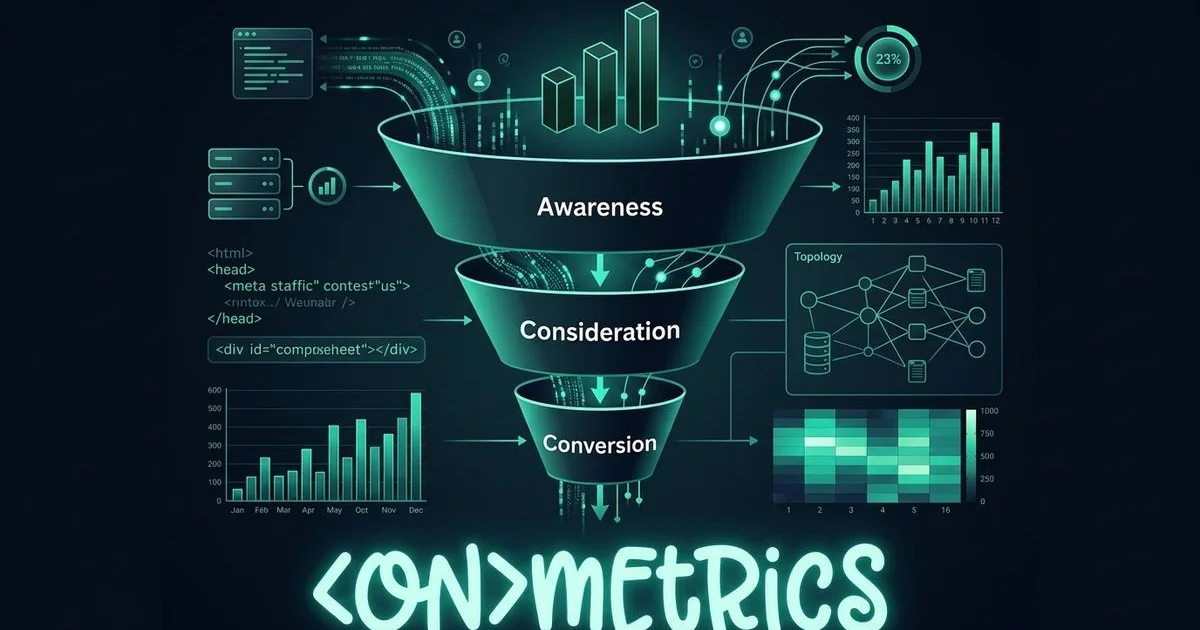
A useful audit separates the funnel into visible stages. Can the business be found for the right services? Does the page explain the offer clearly? Does the proof reduce risk? Does the form ask only what is needed? Does the team respond fast enough? Does reporting show which leads became revenue?
That sequence prevents a common mistake: paying for more traffic while the page, intake, or follow-up system is still leaking. Traffic can make a working system scale. It cannot make a broken system honest.
Build Feedback from the Front Desk or Sales Team
The person answering calls often knows more about lead quality than the dashboard. They hear which questions repeat, which locations are poor fit, which services are misunderstood, and which campaigns produce confused callers.
That feedback should go back into the marketing system. If callers keep asking whether you serve a nearby town, the page needs clearer service-area language. If forms arrive without enough job detail, the form needs one better qualifying question. If the same poor-fit searches keep appearing, the ad account needs tighter negatives and landing pages.
Lead generation improves when marketing and operations share the same definitions. Otherwise one team celebrates form volume while the other team deals with the wrong work.
References
- [1] Google Ads Help, About Conversion Measurement. https://support.google.com/google-ads/answer/1722022
- [2] Google Business Profile Help, Tips to Improve Your Local Ranking. https://support.google.com/business/answer/7091
- [3] CRTC, CASL Guidance on Implied Consent. https://crtc.gc.ca/eng/com500/guide.htm
- [4] Office of the Privacy Commissioner of Canada, Guidelines for Obtaining Meaningful Consent. https://www.priv.gc.ca/en/privacy-topics/business-privacy/collecting-personal-information/consent/gl_omc_201805/
Based in London, Ontario. ONmetrics provides data-driven digital marketing in London, Ontario and across Southwestern Ontario. Book a free audit →