
Digital marketing for Stratford Ontario businesses needs more nuance than a generic small-business plan. Some Stratford companies serve local residents. Some depend on visitors. Some sell B2B services, professional expertise, arts, hospitality, retail, or regional appointments.
That mix changes what the website, ads, and tracking need to do. A visitor searching before a weekend trip behaves differently from a local homeowner comparing service providers or a business buyer looking for a specialist.
Start with the Market the Page Serves
investStratford describes Stratford businesses as globally connected and community driven, with strengths connected to digital infrastructure, industry, business innovation, the Stratford Festival, and the University of Waterloo School of Interaction Design and Business.[1]
That context is useful because Stratford demand is not only local. A marketing plan may need to speak to residents, tourists, event-driven buyers, professional-service clients, regional employers, or remote decision makers.
Local Search Still Needs Clear Pages
Google's SEO Starter Guide says SEO helps search engines understand content and helps users find and evaluate a site.[3] For Stratford businesses, that means the website needs distinct pages for the services, offers, locations, and buyer questions that matter.
A restaurant, gallery, retailer, consultant, clinic, law firm, contractor, or tourism-adjacent business should not rely on one homepage to answer every search. Search visibility improves when each page has a clear job.
Downtown and Visitor Demand Change the Message
The Downtown Stratford BIA describes itself as an association of downtown small business owners working with the City of Stratford to support a thriving, competitive, safe business area that attracts shoppers, diners, tourists, and new business.[2]
That is a different marketing environment than a purely residential service area. Some pages need hours, parking, menus, availability, event timing, booking paths, and location cues. Others need credibility, case studies, service-area explanation, and lead qualification.
Paid Media Should Follow Capacity
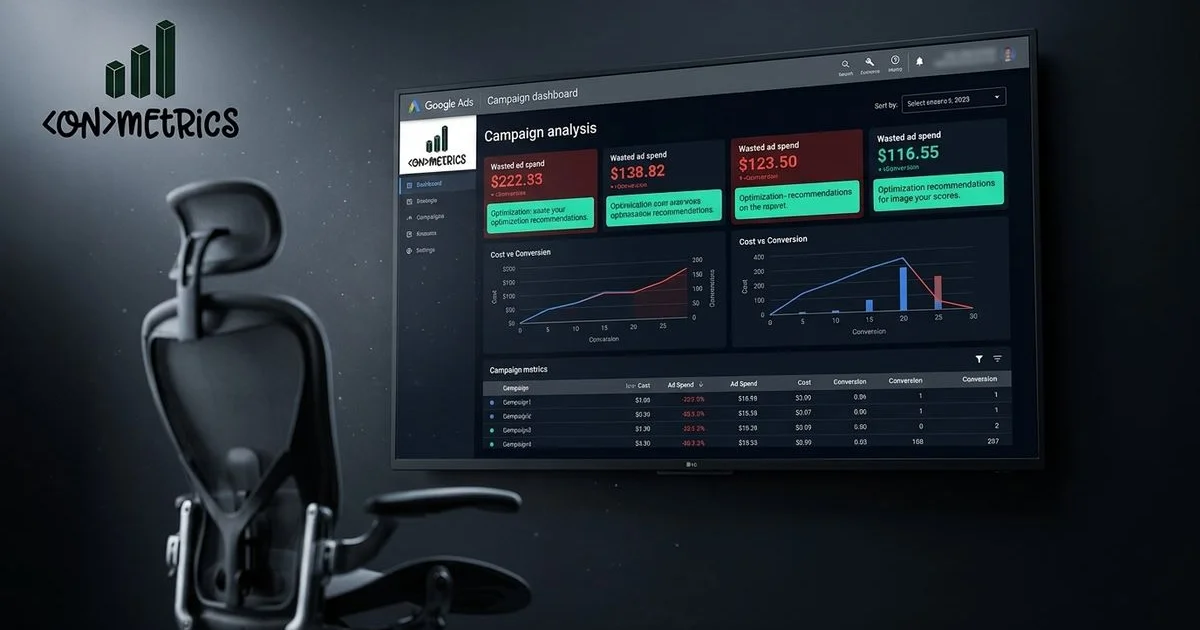
Google Ads conversion measurement is meant to identify which campaigns and ads drive valuable customer activity.[4] In Stratford, valuable activity depends on the business model. It might be a reservation, call, quote request, appointment, store visit, ticket interest, or consultation.
Paid media should follow capacity. Do not buy dinner demand if the kitchen is already full. Do not scale lead forms if the sales team cannot respond. Do not treat tourist traffic and local repeat demand as the same campaign.
Connect the Plan Back to Revenue
ONmetrics supports digital marketing in Stratford Ontario by tying search, paid media, landing pages, and reporting back to useful outcomes. That is the difference between a busy marketing calendar and a business system.
The best next step is usually not more content for its own sake. It is choosing the page or campaign with the clearest revenue path, improving that asset, and measuring whether better visitors turn into better leads.
Build Separate Paths for Different Buyers
A Stratford business may need more than one buyer path. A tourism-facing business may need pages that support seasonal planning, mobile browsing, reservations, and event timing. A professional-service business may need authority, consultation fit, local trust, and lead qualification. A B2B company may need proof that it understands regional industries and can work beyond the downtown core.
Those paths should not compete with each other. They should connect. A visitor page can link to a booking path. A local service page can link to reviews and case studies. A paid-search landing page can link to a deeper guide when the decision is not immediate.
That is how Stratford content avoids becoming generic. It does not just say "we serve Stratford." It explains the kind of demand the business is trying to win and gives the reader a next step that fits the way they are deciding.
Make Measurement Fit the Season
Stratford demand can be seasonal, event-driven, appointment-driven, or steady depending on the business. That makes measurement more important, not less. A good month may come from a campaign, a festival weekend, a referral pattern, stronger rankings, or a page that finally matches the right intent.
Reports should separate those signals. Track calls, forms, reservations, email inquiries, booked consultations, ecommerce actions, and source pages where possible. Then compare them against the calendar and the campaign changes that were actually made.
The point is not to make reporting complicated. The point is to avoid false confidence. If a campaign rises during a seasonal demand spike, it should not automatically get credit for the whole lift. If a page improves during a slow period, it may still be doing valuable work that will pay off when demand returns.
References
- [1] investStratford, Why Stratford. https://www.investstratford.com/why-stratford
- [2] Downtown Stratford BIA, About. https://downtownstratford.ca/about/
- [3] Google Search Central, SEO Starter Guide. https://developers.google.com/search/docs/fundamentals/seo-starter-guide
- [4] Google Ads Help, About Conversion Measurement. https://support.google.com/google-ads/answer/1722022
Based in London, Ontario. ONmetrics provides data-driven digital marketing in London, Ontario and across Southwestern Ontario. Book a free audit →