
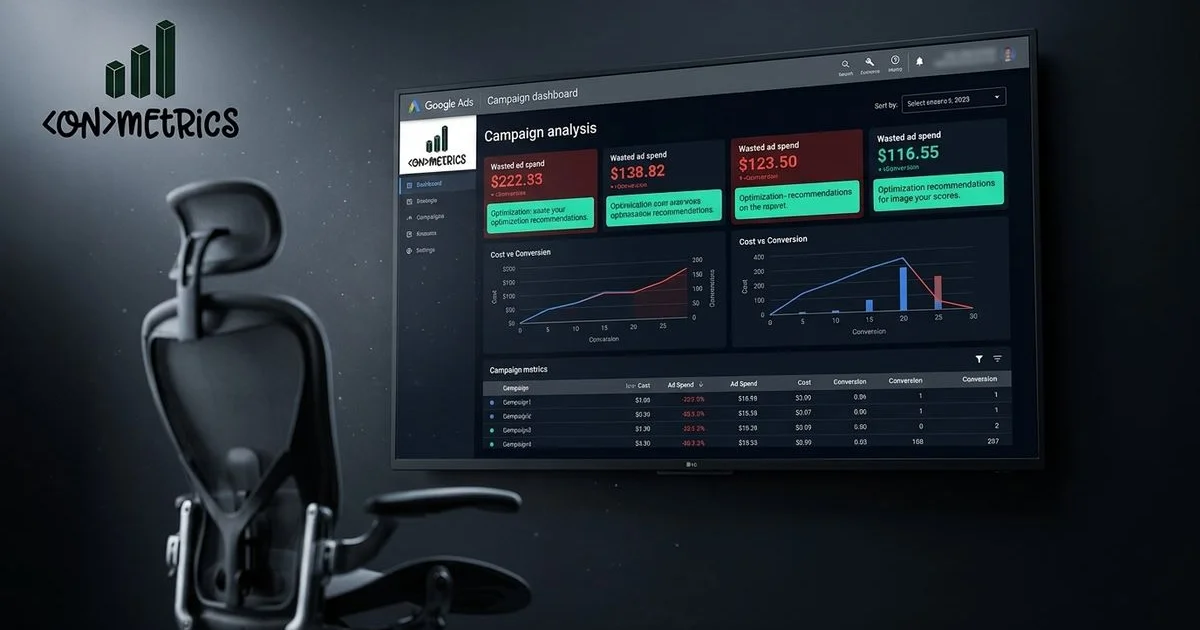
Google Ads in Woodstock Ontario can produce leads quickly, but only when the account is built around local buying behaviour. A campaign that treats Woodstock, London, Kitchener, Brantford, and every nearby township as the same market will usually spend before it learns.
The practical question is simple: where should the money be allowed to go, and what counts as a useful lead when it gets there?
Location Targeting Is the First Budget Guardrail
Google Ads location targeting lets advertisers choose target locations to reach customers in specific geographic areas.[1] That sounds basic, but it is one of the biggest PPC controls for a Woodstock business.
A contractor may want a radius around Woodstock and nearby Oxford County communities. A professional service may accept leads from London, Kitchener-Waterloo, Brantford, or rural areas if the client value justifies the drive or remote consultation. A local retailer may need a much tighter footprint.
Woodstock Search Intent Is Not One Thing
Oxford Connection describes Woodstock as a regional commercial centre with transportation access through the 401 and 403 corridor.[4] That creates different intent patterns: local residents searching nearby, businesses serving industrial buyers, and companies reaching customers across Oxford County.
Those searches should not all land on one generic page. The ad group, keyword, landing page, and follow-up path should match the kind of buyer the business actually wants.
Conversion Tracking Has to Separate Leads from Noise
Google describes conversion measurement as a way to identify which ads, keywords, ad groups, and campaigns drive valuable customer activity.[2] For a Woodstock business, that valuable activity might be a phone call, quote form, booked appointment, direction request, or offline sale matched back later.
The word valuable matters. A job seeker, a supplier pitch, or a customer outside the service area should not be counted the same way as a qualified lead. Without that distinction, the campaign may scale the wrong signal.
Tracking Setup Has Limits
Google's website conversion-tracking documentation explains that tracking can depend on ad-interaction identifiers, tags, cookies, conversion linker setup, and implementation quality.[3] In plain terms: measurement is useful, but it is not magic.
That is why ONmetrics pairs PPC management for local businesses with landing-page checks, call tracking, form review, and simple lead-quality notes. The account should show what happened after the click, not just whether the click was cheap.
Spend Where the Business Can Actually Win
Many small campaigns fail by being too broad too soon. Start with the services, locations, and hours where the business can respond quickly and profitably. Then expand from evidence.
For Woodstock and Oxford County campaigns, the goal is not to cover the map. It is to buy the searches that have a believable path to revenue, then prove that path before increasing spend.
The Landing Page Should Match the Local Promise
A Woodstock ad should not send every click to a generic homepage. If the ad mentions a specific service, the page should show that service, the area served, proof, next steps, and the fastest way to contact the business. If the business serves multiple Oxford County communities, the page should say that clearly without pretending to have offices everywhere.
For service businesses, the page should also reduce bad-fit leads. If minimum job size, appointment availability, delivery area, business hours, or emergency coverage matter, say so before the form. A smaller number of qualified leads is usually worth more than a larger number of vague inquiries.
That makes PPC management a feedback loop. Search terms show what people want. Landing pages show whether the offer is clear. Conversion data shows whether the traffic was useful. Lead review shows whether the account should scale, narrow, or change direction.
Use Search Terms as Local Research
The search terms report is not just cleanup work. It shows how people in and around Woodstock describe the problem. They may search by city, by county, by service urgency, by price, by brand, or by a nearby community. Those patterns can become better ad groups, better landing-page sections, and better negative keyword lists.
When the same irrelevant term appears repeatedly, it is not an annoyance. It is the account telling you that the targeting, match type, ad copy, or landing page promise is too loose. Fix that before raising the budget.
For a local business, PPC should become sharper every week. The campaign should learn which searches deserve a bid, which areas deserve a lower bid or exclusion, which calls are real opportunities, and which offers need their own page before more money is added.
References
- [1] Google Ads Help, Location Targeting. https://support.google.com/google-ads/answer/6317
- [2] Google Ads Help, About Conversion Measurement. https://support.google.com/google-ads/answer/1722022
- [3] Google Ads Help, How Google Ads Tracks Website Conversions. https://support.google.com/google-ads/answer/7521212
- [4] Oxford Connection, Woodstock Community Profile. https://oxfordconnection.ca/our-communities/woodstock
Based in London, Ontario. ONmetrics provides data-driven digital marketing in London, Ontario and across Southwestern Ontario. Book a free audit →