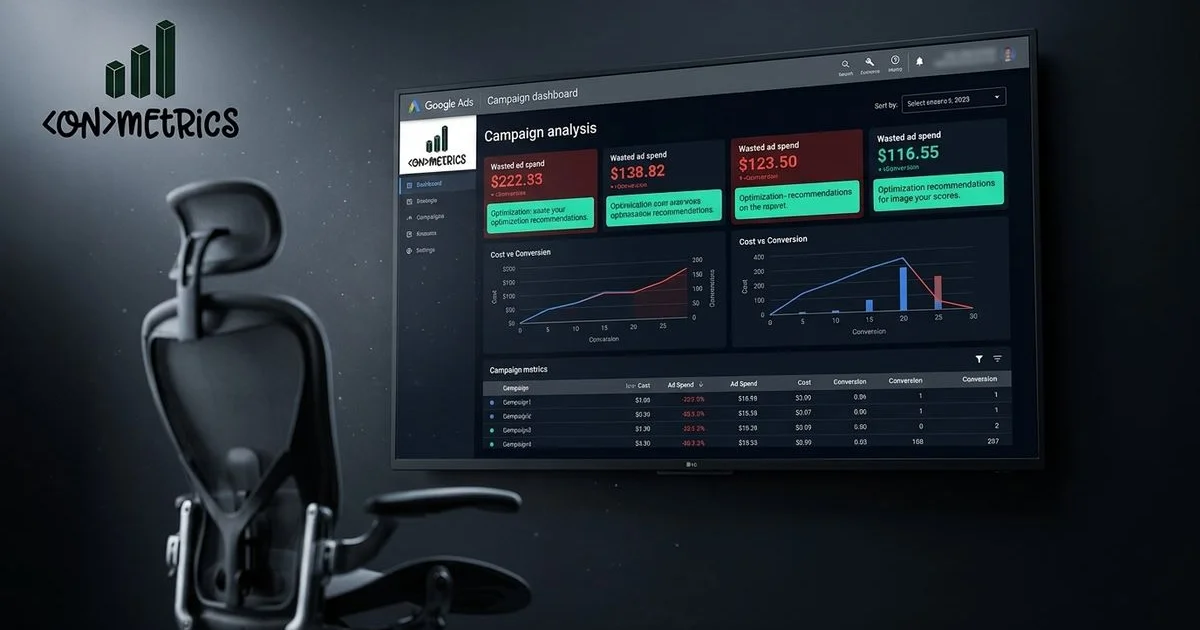

Marketing budget planning for small businesses should answer one question first: what can we afford to learn? A budget that is too small to produce evidence creates frustration. A budget that scales before tracking is clean creates waste.
Separate Fixed Work from Test Spend
Some work is infrastructure: tracking, landing pages, Google Business Profile cleanup, service pages, analytics, and creative assets. Some work is variable spend: Google Ads, paid social, sponsorships, print, directories, and promotions.
Do not judge infrastructure like media spend. A landing page may not create a lead by itself, but it can make every click, referral, and organic visit more useful.
Use Budget as a Pacing Tool
Google Ads explains that average daily budgets control campaign spend over time, and that monthly charging limits are based on the average daily budget multiplied by the average number of days in a month.[1] That makes budget a pacing decision, not a promise of results.
Small businesses should budget enough to see patterns: which searches convert, which locations waste spend, which landing pages perform, and which leads become revenue.
Track What the Budget Bought
Google's conversion measurement documentation frames conversions as valuable customer activities such as calls, website actions, app actions, and offline conversions.[2] That is the difference between spending and learning.
A budget report should show spend, source, campaign, landing page, conversion action, lead quality, and revenue where available. If it cannot show those basics, increasing the budget makes the problem larger.
Avoid Claims the Budget Cannot Support
Competition Bureau Canada guidance on deceptive marketing practices is a reminder that marketing claims need to avoid false or misleading representations.[3] Budget planning should use careful language for the same reason.
Do not promise guaranteed leads, guaranteed ranking, guaranteed ROAS, or "best" performance without evidence. A good budget plan explains assumptions, risks, and measurement limits.
Plan by Stage
Stage one is foundation: tracking, offer clarity, core pages, profile cleanup, and lead definitions. Stage two is learning: run controlled campaigns and content updates. Stage three is allocation: move spend toward channels that produce qualified opportunities. Stage four is scale: increase the budget only when the system can absorb more demand.
Google says data-driven attribution can use conversion data to calculate contribution across ad interactions, but model performance improves with more data.[4] Small accounts should treat attribution as a directional budgeting input, not mathematical certainty.
Use a Practical Budget Mix
For many small businesses, the first useful split is simple: protect core website and tracking work, keep one controlled paid test, maintain local SEO/reviews, and reserve a small amount for experiments. The exact percentages matter less than the review rhythm.
Review monthly: what did we spend, what did we learn, what should stop, what needs fixing, and what deserves more budget? That rhythm keeps marketing from becoming a pile of disconnected invoices.
Use Minimum Viable Tests
A small business budget should buy the smallest useful test, not the cheapest possible activity. A useful test has a clear offer, a defined audience, a clean landing page, working tracking, and a decision date.
For PPC, that might mean one tightly scoped search campaign instead of five broad campaigns. For SEO, it might mean improving the highest-opportunity service page before publishing ten new articles. For conversion work, it might mean fixing a form and call path before redesigning the whole site.
The test should end with a decision: scale, pause, fix, or reframe. If a test cannot produce a decision, the budget was probably too scattered.
Protect the Foundation Budget
Small businesses often cut the foundational work because media spend feels more active. That is backwards. Tracking, page quality, reviews, site speed, consent language, and offer clarity make every channel more accountable.
A practical budget sets aside money for maintenance and measurement before optional experiments. That includes fixing broken tracking, cleaning up service pages, reviewing lead quality, and keeping the site aligned with what the business actually sells.
Once the foundation is stable, variable spend becomes easier to judge. If a channel performs badly, you can look at search intent, offer quality, follow-up, and lead fit instead of wondering whether the measurement system is broken.
Give Each Channel a Job
A budget gets easier to manage when every channel has a role. SEO should build durable discovery and reduce dependence on paid traffic. PPC should test immediate demand and expose which offers convert. Email should follow up with people who gave permission. CRO should improve the value of traffic the business already earns.
When channels have roles, the business stops asking every channel to prove itself the same way. SEO may be judged by qualified organic demand and page growth. PPC may be judged by cost per qualified lead. CRO may be judged by conversion lift or better lead fit. Attribution may be judged by whether it changes decisions.
This also protects the budget from panic. A slow SEO month does not mean SEO failed if page visibility is improving. A PPC test with high cost per lead may still be useful if it proves an offer is too broad before the business invests in a larger campaign.
References
- [1] Google Ads Help, Set and Change an Average Daily Budget. https://support.google.com/google-ads/answer/2375420
- [2] Google Ads Help, About Conversion Measurement. https://support.google.com/google-ads/answer/1722022
- [3] Competition Bureau Canada, Deceptive Marketing Practices. https://competition-bureau.canada.ca/en/deceptive-marketing-practices
- [4] Google Ads Help, About Data-Driven Attribution. https://support.google.com/google-ads/answer/6394265
Based in London, Ontario. ONmetrics provides data-driven digital marketing in London, Ontario and across Southwestern Ontario. Book a free audit →